What Are Micronutrients?
Micronutrients are vitamins and minerals required in small quantities for normal physiological function. Unlike macronutrients, micronutrients don't provide energy but are essential for countless bodily processes including energy metabolism, immunity, bone health, and nervous system function.
Understanding Vitamins
Vitamins are organic compounds synthesized by plants or animals. The human body cannot produce most vitamins, so they must be obtained from food. Vitamins are classified as either fat-soluble or water-soluble.
Fat-Soluble Vitamins
Absorbed with dietary fat and stored in body fat. Excess intake can accumulate and potentially become toxic.
Vitamin A
Functions: Vision, immune function, cell growth
Sources: Carrots, sweet potatoes, spinach, liver, fortified milk
Deficiency: Night blindness, increased infections
Vitamin D
Functions: Calcium absorption, bone health, immune function
Sources: Fatty fish, egg yolks, mushrooms, sunlight exposure, fortified milk
Deficiency: Weak bones, impaired calcium absorption
Vitamin E
Functions: Antioxidant protection, cell membrane integrity
Sources: Nuts, seeds, vegetable oils, leafy greens
Deficiency: Nerve damage, muscle weakness (rare)
Vitamin K
Functions: Blood clotting, bone metabolism
Sources: Leafy greens, cruciferous vegetables, fermented foods
Deficiency: Excessive bleeding, impaired bone mineralization
Water-Soluble Vitamins
Not stored in the body and excess amounts are excreted in urine. Must be consumed regularly. Deficiencies develop faster than with fat-soluble vitamins.
Vitamin C
Functions: Collagen synthesis, immune function, antioxidant
Sources: Citrus fruits, berries, peppers, broccoli
Deficiency: Scurvy (historically), poor wound healing
B Vitamins
Functions: Energy metabolism, nerve function, DNA synthesis
Sources: Whole grains, meat, eggs, legumes, leafy greens
Deficiency: Varies by B vitamin; includes fatigue, nerve damage
Folate
Functions: DNA synthesis, cell division, fetal development
Sources: Leafy greens, legumes, asparagus, fortified grains
Deficiency: Anemia, birth defects, neural tube defects in pregnancy
B12
Functions: Nerve function, DNA synthesis, energy metabolism
Sources: Animal products, fortified plant-based foods, supplements
Deficiency: Pernicious anemia, nerve damage
Understanding Minerals
Minerals are inorganic elements that come from soil and water. Plants absorb minerals from soil, and animals obtain minerals by eating plants or other animals.
Major Minerals
Required in amounts greater than 100 milligrams daily:
Calcium
Functions: Bone and tooth structure, muscle contraction, nerve function
Sources: Dairy, leafy greens, fortified plant milks, fish with bones
Phosphorus
Functions: Bone structure, energy production, cell signaling
Sources: Meat, dairy, whole grains, legumes
Magnesium
Functions: Enzyme function, muscle and nerve function, energy production
Sources: Leafy greens, nuts, seeds, whole grains
Sodium, Potassium, Chloride
Functions: Fluid balance, nerve function, muscle contraction
Sources: Naturally present in most foods; sodium added in processed foods
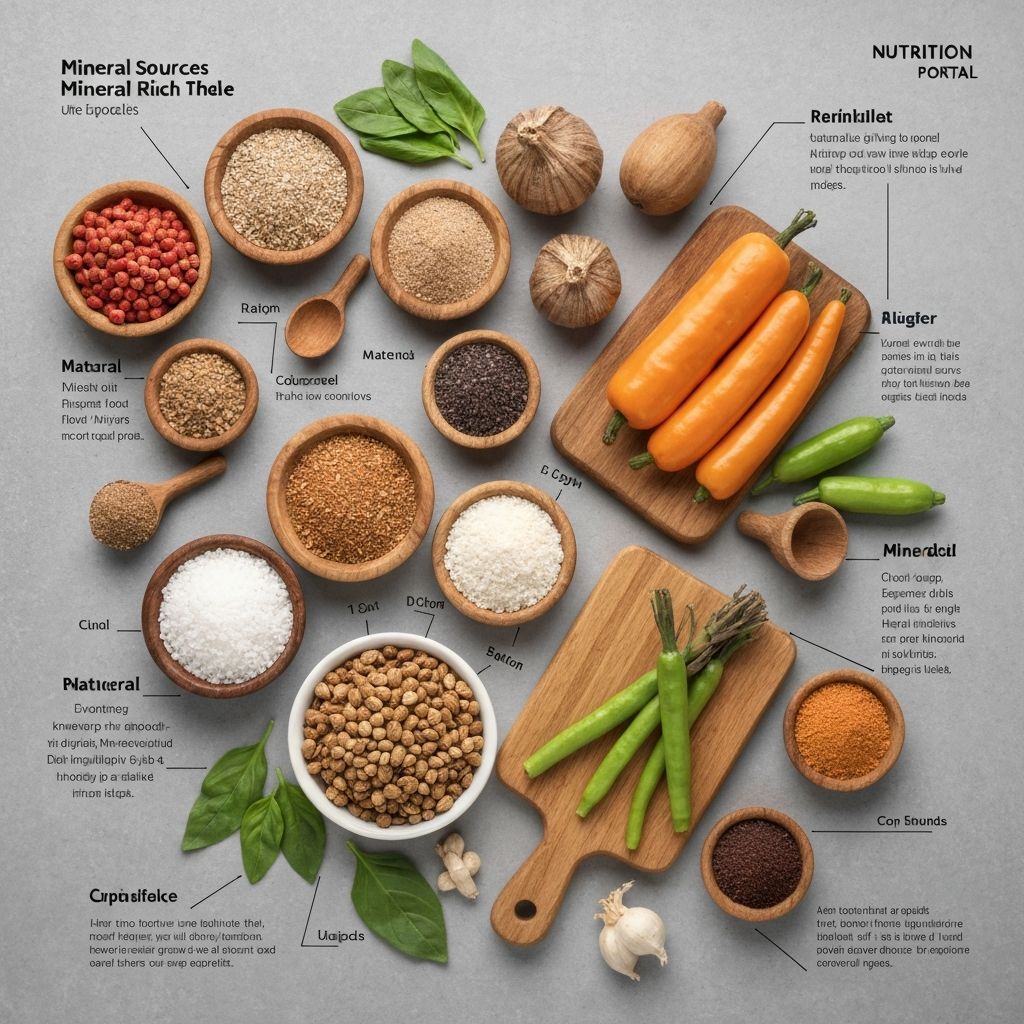
Trace Minerals
Required in smaller amounts (less than 100 milligrams daily), but essential for health:
Iron
Functions: Oxygen transport, energy metabolism
Sources: Red meat, legumes, fortified cereals, leafy greens
Deficiency: Anemia, fatigue, weakness
Zinc
Functions: Immune function, wound healing, protein synthesis
Sources: Meat, shellfish, legumes, nuts, seeds
Deficiency: Impaired immunity, slow wound healing
Iodine
Functions: Thyroid hormone synthesis, metabolism
Sources: Iodized salt, seafood, dairy
Deficiency: Goiter, hypothyroidism, impaired development
Copper
Functions: Iron metabolism, collagen formation, antioxidant
Sources: Shellfish, nuts, seeds, whole grains
Deficiency: Rare; includes anemia, connective tissue problems
Selenium
Functions: Antioxidant, thyroid function, immune function
Sources: Brazil nuts, seafood, meat, whole grains
Deficiency: Rare in developed countries
Manganese
Functions: Bone formation, antioxidant, carbohydrate metabolism
Sources: Whole grains, nuts, legumes, tea
Deficiency: Very rare
Micronutrient Bioavailability
Bioavailability refers to how efficiently the body absorbs and uses micronutrients. Several factors affect bioavailability:
- Food Source: Animal sources of some nutrients are more bioavailable than plant sources (e.g., heme iron from meat vs. non-heme iron from plants)
- Food Preparation: Cooking, fermenting, and sprouting can affect nutrient availability
- Nutrient Interactions: Some nutrients enhance absorption of others (e.g., vitamin C enhances iron absorption)
- Dietary Components: Fiber, phytates, and tannins can interfere with mineral absorption
- Individual Factors: Age, digestive health, medications, and genetic factors affect absorption
Achieving Micronutrient Adequacy
Consuming a diverse diet including whole grains, legumes, vegetables, fruits, nuts, seeds, and animal products (if included) provides most micronutrients needed for health. Some individuals may require supplementation based on age, health status, dietary restrictions, or medical conditions.
Conclusion
Micronutrients are essential for health despite being needed in small quantities. While deficiency diseases are less common in developed countries than historically, marginal deficiencies can still affect health. A balanced diet emphasizing whole, nutrient-dense foods provides the foundation for adequate micronutrient intake.